How to Get a Ski Season Job in New Zealand
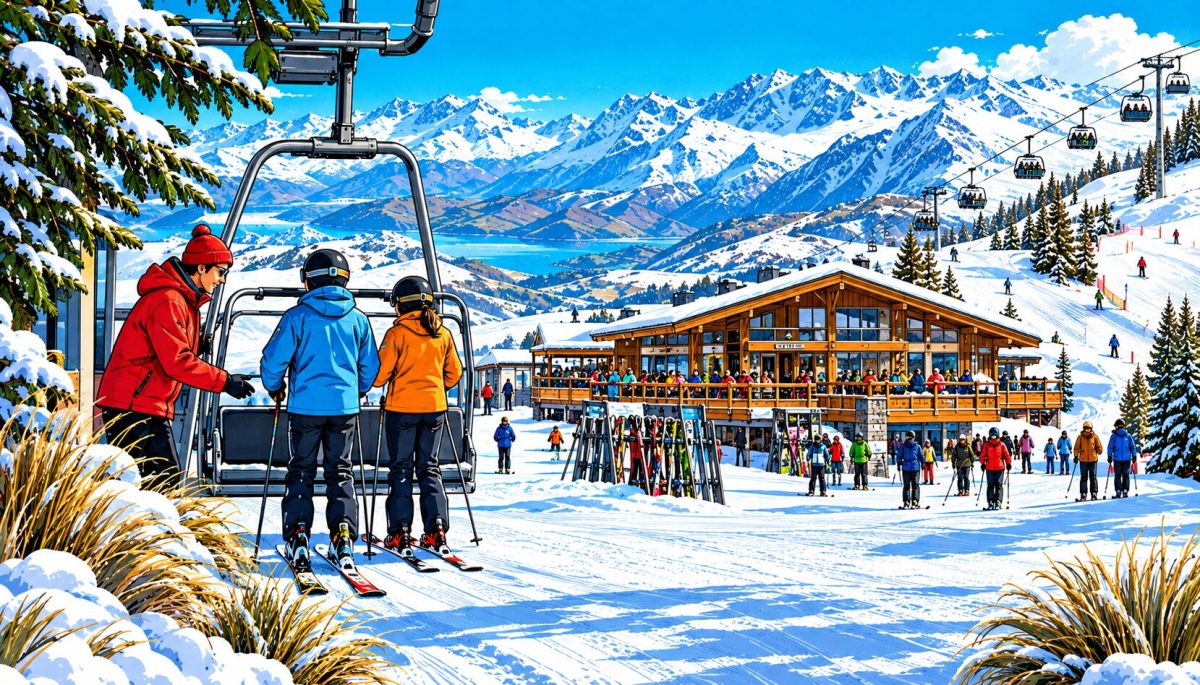
To get a ski season job in New Zealand you apply in March or April for a season that runs June to October, and you apply directly to the ski field operators rather than waiting for listings. Most roles need no snow experience — lift operations, rental, food and beverage, transport and guest services take beginners. Full-season staff usually receive a free season pass on top of wages.
The New Zealand winter is the one part of the backpacker year that punishes late planning hardest. Orchards hire the week you turn up; ski fields close their recruitment months before there is any snow on the ground. If you are reading this in June, you are probably reading it a season too late — which is useful information, because it means you should be planning for next year now.
The timeline that decides everything
| When | What happens |
|---|---|
| February to March | Operators open applications for the coming winter |
| March to April | Peak recruiting. Interviews, often by video from overseas |
| May | Offers out, accommodation secured, arrivals in town |
| Early June | Staff training and pre-season set-up |
| Mid June | Fields open. Coronet Peak usually first, others follow |
| July to August | Peak season. School holidays, full rosters, most hours |
| September to October | Wind-down and closing weekends |
The single most important line in that table is March to April. Apply then and you are choosing between offers. Apply in May and you are taking what is left. Turn up in June without a job and you are competing with several hundred other people for casual hospitality shifts in the most expensive town in the country.
Where the work is
Queenstown
The biggest employment market by a distance, serving Coronet Peak and The Remarkables. Beyond the mountain itself there is an entire winter economy of bars, restaurants, hotels, rental shops and shuttle operations. The transport side alone runs a substantial fleet of buses up the access roads every morning, and drivers with the right licence class are chronically in demand. The trade-off is accommodation: Queenstown rents in winter are brutal, and you should not accept a job here without knowing where you will sleep.
Wanaka
Cardrona and Treble Cone. Smaller, quieter and generally considered a better place to actually live for a season, with the same accommodation squeeze in a smaller pool. Cardrona in particular runs a large operation and hires across snow safety, lift operations, retail and guest services.
Methven and Canterbury
Mt Hutt, one of the best-regarded fields in the country, with Methven as the base town. Cheaper to live in than Queenstown by a wide margin and a friendlier landing spot for a first season. Christchurch is close enough for days off.
The central plateau
Whakapapa and Turoa on Mount Ruapehu, the North Island's only significant ski employment. Winter roles typically run June to October. Fewer jobs, less competition, and a very different feel from the South Island resort towns.
The club fields
Small volunteer-run areas such as Roundhill near Tekapo, Craigieburn and Broken River. Tiny teams, short defined seasons, and an experience closer to living on a mountain than working at a resort. Roundhill's 2026 season, for example, ran from late June to late September — under thirteen weeks of work.
The jobs, and which ones take beginners
The great misconception is that you need to ski well. For most roles you do not need to ski at all.
- Lift operations. The classic entry job. Outdoors all day, cold, repetitive, sociable. No experience required.
- Food and beverage. Base building cafes, on-mountain restaurants, bars in town. Hospitality experience helps; a Licence Controller Qualification helps more.
- Rental and retail. Fitting boots and tuning skis. Trained on the job.
- Transport. Shuttle and bus driving up the access road. Requires the correct New Zealand licence class and a clean record, and pays accordingly.
- Guest services and ticketing. Front of house. Good customer manner matters more than snow knowledge.
- Ski and snowboard school. The one area that genuinely needs qualifications. Instructor certification takes time and money to obtain and is not a first-season plan.
- Snow safety, grooming, patrol. Skilled, experienced, and generally filled by returning staff.
What it pays, and what the pass is worth
Entry-level ski field work sits at or a little above the adult minimum wage of NZD 23.95 an hour from 1 April 2026, with technical and licensed roles paying more. The number that changes the calculation is the staff pass: full-time seasonal crew at the major operators typically receive a season pass covering multiple mountains, which retails for well over a thousand dollars. Factor that in and a lift operator on minimum wage is effectively earning meaningfully more than the payslip says, provided you actually use it.
Hours are the other variable. Peak July and August rosters are generous; June and October can be thin, and a bad snow year means reduced hours across the board. For the arithmetic on what an hourly rate turns into after tax, see how much backpackers actually earn in New Zealand.
How to actually apply
- Go direct. The mountain operators run their own recruitment sites and post their season roles there first. Apply to the operator, not only to aggregators.
- Apply to several. Four or five applications across two regions is normal. This is a competitive market with a fixed hiring window.
- Solve accommodation in the same breath. Some employers offer or broker staff housing; those roles are worth taking even at a slightly lower rate. If yours does not, secure a room before you accept.
- Have the visa already. Recruiters will ask for your visa status in the first exchange, and an application without work rights goes in the bin. See how the working holiday visa works.
- Get your licence sorted. If you hold a foreign driver licence, understand the New Zealand conversion rules before you apply for anything involving a vehicle.
The part that is not good
A ski season is the most expensive way a backpacker can spend four months in this country. Winter rents in Queenstown and Wanaka can eat well over half a minimum-wage take-home, the season is short, the hours at either end of it are unreliable, and a poor snow year hits your roster before it hits anyone else's. People come out of a New Zealand ski season having had the best winter of their lives and with less money than they started with. That is a perfectly reasonable trade, but it should be a decision rather than a surprise, and it is why a lot of travellers deliberately do a full harvest first and a ski season second.
Which is exactly the pattern to plan for: earn through summer and autumn in the orchards, spend it on the mountain in winter. The fruit picking season calendar shows how the two halves fit together.
If the mountain says no
Queenstown, Wanaka and Methven all run large winter hospitality and accommodation sectors that hire independently of the ski fields, and those employers recruit later and more casually. A bar job in town with a self-funded pass is a perfectly good season. Our overview of backpacker jobs in New Zealand covers the other categories that stay busy through winter, and you can browse current ski season listings or search everything by region.


