When Is Fruit Picking Season in New Zealand?
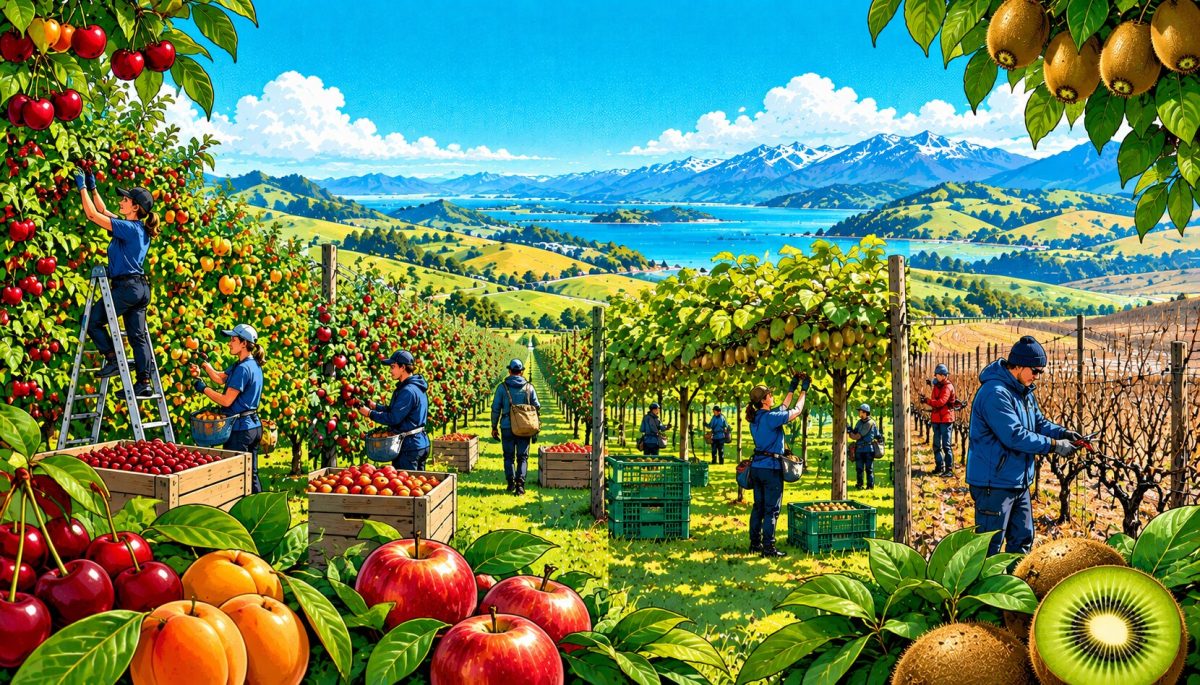
Fruit picking season in New Zealand runs from roughly November to May, but no single region is busy for all of it. Summerfruit in Central Otago peaks December and January, apples in Hawke's Bay and Nelson peak February to April, and kiwifruit in the Bay of Plenty peaks March to May. December through April are the four months when the whole country is hiring at once.
The single most expensive mistake a traveller makes in New Zealand is arriving in the right place at the wrong time. An orchard that turns away forty applicants a day in March has no work at all in September, and no amount of enthusiasm changes that. This page is the calendar, so you can plan the route around the harvest instead of the other way round.
The short answer, by month
| Month | What is being picked | Where |
|---|---|---|
| November | Cherries starting, asparagus, early berries | Central Otago, Waikato, Hawke's Bay |
| December | Cherries at peak, strawberries, apricots starting | Central Otago, Auckland, Nelson |
| January | Apricots, peaches, nectarines, plums, berries | Central Otago, Hawke's Bay, Nelson |
| February | Apples starting, wine grapes starting, blueberries | Hawke's Bay, Nelson, Marlborough |
| March | Apples at peak, grapes at peak, kiwifruit starting | Hawke's Bay, Nelson, Marlborough, Bay of Plenty |
| April | Apples finishing, kiwifruit at peak | Nelson, Bay of Plenty, Northland |
| May | Kiwifruit finishing, packhouse work continues | Bay of Plenty, Northland |
| June to September | Vineyard pruning, orchard pruning, thinning | Marlborough, Central Otago, Hawke's Bay |
| October | Vineyard wire-lifting, asparagus starting | Marlborough, Waikato |
The four regions worth planning around
Bay of Plenty — kiwifruit, March to May
Te Puke calls itself the kiwifruit capital of the world and it is not really an exaggeration. This is the largest concentration of seasonal horticultural work in the country, and for eight or nine weeks from mid-March it absorbs an enormous number of travellers into picking, and then into packhouses that run shifts around the clock. Picking is hard, fast and usually paid by the bin. Packhouse work is indoors, hourly, and often has night shifts that pay a premium.
If you want to be one place for the whole harvest, this is the strongest candidate. Current listings: kiwifruit picking jobs.
Hawke's Bay — stone fruit then apples, January to April
Hastings and Napier sit in the middle of the country's biggest apple region, with stone fruit orchards filling the gap before it. The useful thing about Hawke's Bay is the overlap: you can arrive for peaches in January and still be working apples in April without moving town. It is also a place with actual infrastructure, which matters more than it sounds when you are living out of a van.
Nelson and Motueka — apples, berries and hops, February to April
Motueka is the classic backpacker harvest town, small enough that word of mouth works and diverse enough that there is usually something. Apples, pears, blackcurrants, raspberries, boysenberries, and the hop farms that supply the country's breweries. Growers here have hired travellers for decades and mostly know how to do it properly. One of our readers wrote up a season on a Motueka hop farm, and another described packhouse work in the same town.
Central Otago — summerfruit, November to February
Cromwell, Alexandra and Roxburgh. Cherries are the headline crop and the highest-paying picking work in the country when the fruit is good, because cherry picking is paid by the bucket and a fast picker can earn well above the hourly minimum. The season is short and intense, roughly six weeks from mid-December, and it overlaps with the Queenstown summer, which means competition for beds is fierce and rents spike.
Marlborough is the exception, and it matters
Everyone plans around harvest and forgets the other half of the vineyard year. Marlborough grows a very large share of New Zealand's wine, and grapes need pruning in winter and wire-lifting in spring. That means Blenheim has seasonal work in June, July, August and September, when almost nothing else in the country does. The work is cold, repetitive and usually paid per vine, and it is exactly what you want if you arrive in the southern winter and are not skiing.
How much work there actually is
Three numbers worth carrying in your head. Picking is generally paid at a piece rate, but New Zealand law requires your total pay across the period to reach at least the adult minimum wage of NZD 23.95 an hour from 1 April 2026, so a bad orchard cannot legally leave you on twelve dollars an hour. Three months of continuous seasonal horticulture or viticulture work qualifies you for a three-month visa extension, which is the reason to stay in one region for a whole harvest rather than chasing crops. And a realistic working week during peak harvest is four to five days, not six, because rain stops picking.
What the calendar does not tell you
Harvest dates move. A cold spring pushes kiwifruit back two weeks; a hot dry January brings cherries forward ten days; a hailstorm can end a region's season in twenty minutes. Every date on this page is a normal year, and there are fewer normal years than there used to be. Ring the employer the week before you drive there, not the month before. This is the honest limitation of any harvest calendar, including this one: it tells you where to point yourself, not when to arrive.
The other thing worth saying plainly is that piece-rate picking suits some bodies and not others. Fast, methodical people earn well. People who are slow, or tall, or dealing with a bad back, sometimes earn the legal minimum and nothing more, for eight hours of genuinely hard physical work in the sun. That is not a failure on your part and it is not unusual, but it is worth knowing before you build a budget on picking income. We go through the arithmetic in what backpackers actually earn in New Zealand.
Planning a route
A common and sensible twelve-month circuit: arrive November for Central Otago cherries, move to Hawke's Bay or Nelson in February for apples, finish in the Bay of Plenty for kiwifruit through April and May, then take the winter in Queenstown or Wanaka on the ski fields. That fills eleven of twelve months with paid work and gets you the visa extension along the way.
For the winter half of that plan, see how to get a ski season job in New Zealand. For the full picture of what kinds of work are out there beyond the orchards, start with backpacker jobs in New Zealand.
When you have picked your region and your month, browse current fruit picking jobs and set an email alert so new listings reach you before the season fills.


